
Overview
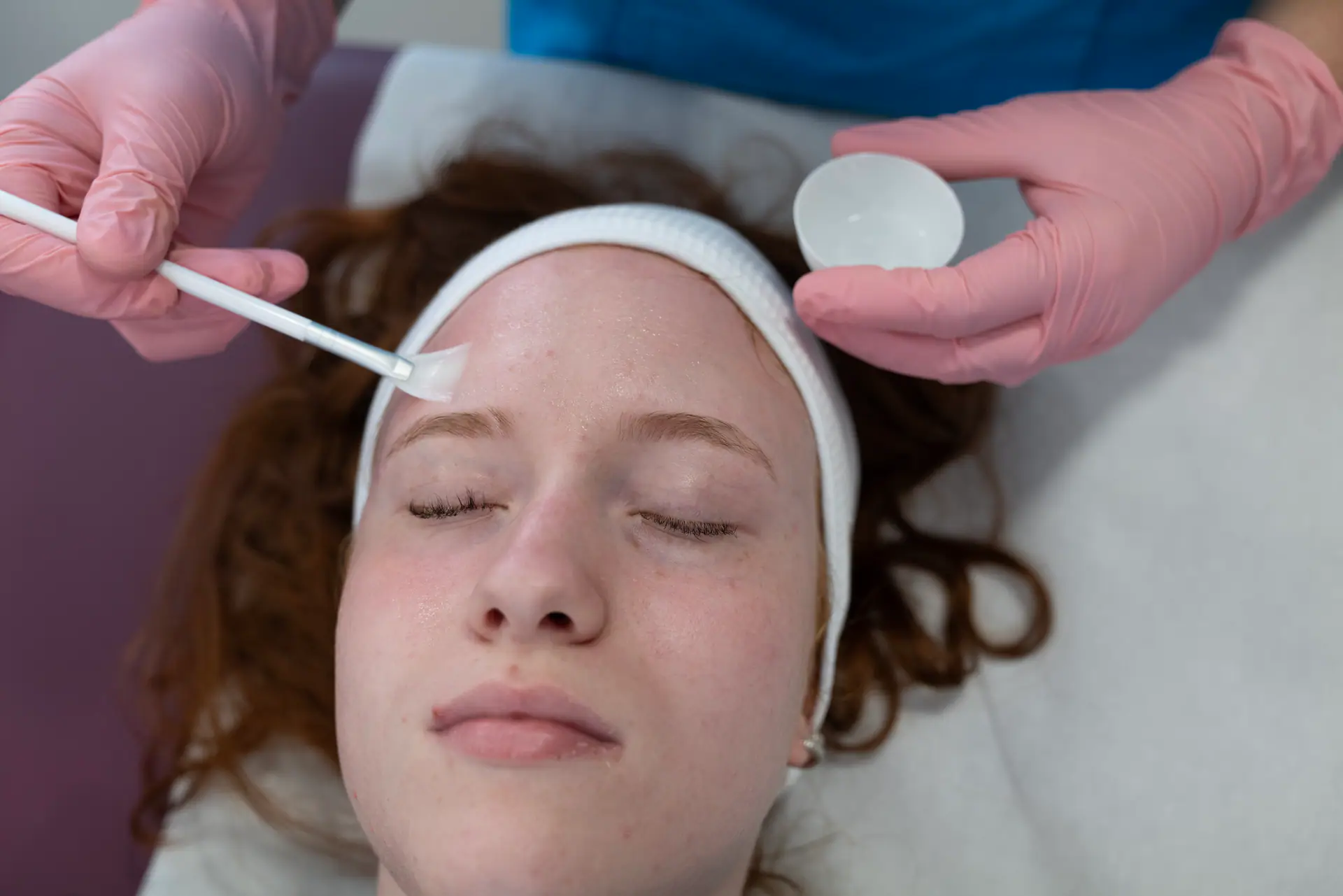
A chemical peel involves applying an acid solution to the skin to remove its outer layers. The skin then renews itself, which can improve skin tone, texture and some pigmentation marks. How deep it works depends on the acid and its strength. A superficial peel, with glycolic acid for example, works on the epidermis. A medium peel, with trichloroacetic acid (TCA), reaches deeper layers and causes several days of peeling.
Indications
- Dull or uneven skin tone
- Pigmentation marks
- Uneven texture and enlarged pores
- Fine surface lines
- Mild acne marks
What to expect
- 1A consultation to assess the skin and choose the type of peel
- 2Preparing the skin at home with a suitable cream for a few weeks, especially before a medium peel
- 3The solution is applied to clean skin with no make-up and left on for a few minutes
- 4The product is neutralised or removed, then a soothing cream is applied
- 5Strict sun protection for the following weeks
Contraindications
- Pregnancy and breastfeeding
- A cold sore outbreak or a skin infection on the area
- Isotretinoin treatment ongoing or stopped less than 6 months ago
- Broken skin, a wound or recent sunburn on the area
- Recent intense sun exposure, or sun exposure planned just after the session
- Known allergy to any of the acids used
- A history of keloid scarring
Frequently asked questions
Does it hurt?
You feel tingling or burning while the product is working. It eases quickly once the product is neutralised or removed. The sensation is stronger with a medium peel.
How many sessions are needed?
A superficial peel is usually done as a course of 2 to 3 sessions, 4 to 6 weeks apart, then maintenance. A medium peel is most often a single session, which can be repeated after several months.
What happens afterwards?
After a superficial peel, the skin can stay red and dry for 1 to 3 days. After a medium peel, it turns red and then peels for a few days. The peeling is visible, but in most cases it does not mean stopping your usual activities.
Can I have a peel in summer?
Sun exposure increases the risk of pigmentation after a peel. Avoid tanning in the month before the session, then use SPF 50 sunscreen for 2 months after a superficial peel and 3 months after a medium peel. Superficial peels can be done all year with this protection. Medium peels are usually scheduled in autumn or winter.
Who should not have a peel?
Peels are not advised during pregnancy or breastfeeding, with herpes or a skin infection, a recent tan, or isotretinoin treatment in the previous months. Olive to dark skin needs suitable preparation and a suitable type of peel to limit the risk of pigmentation.