
Overview
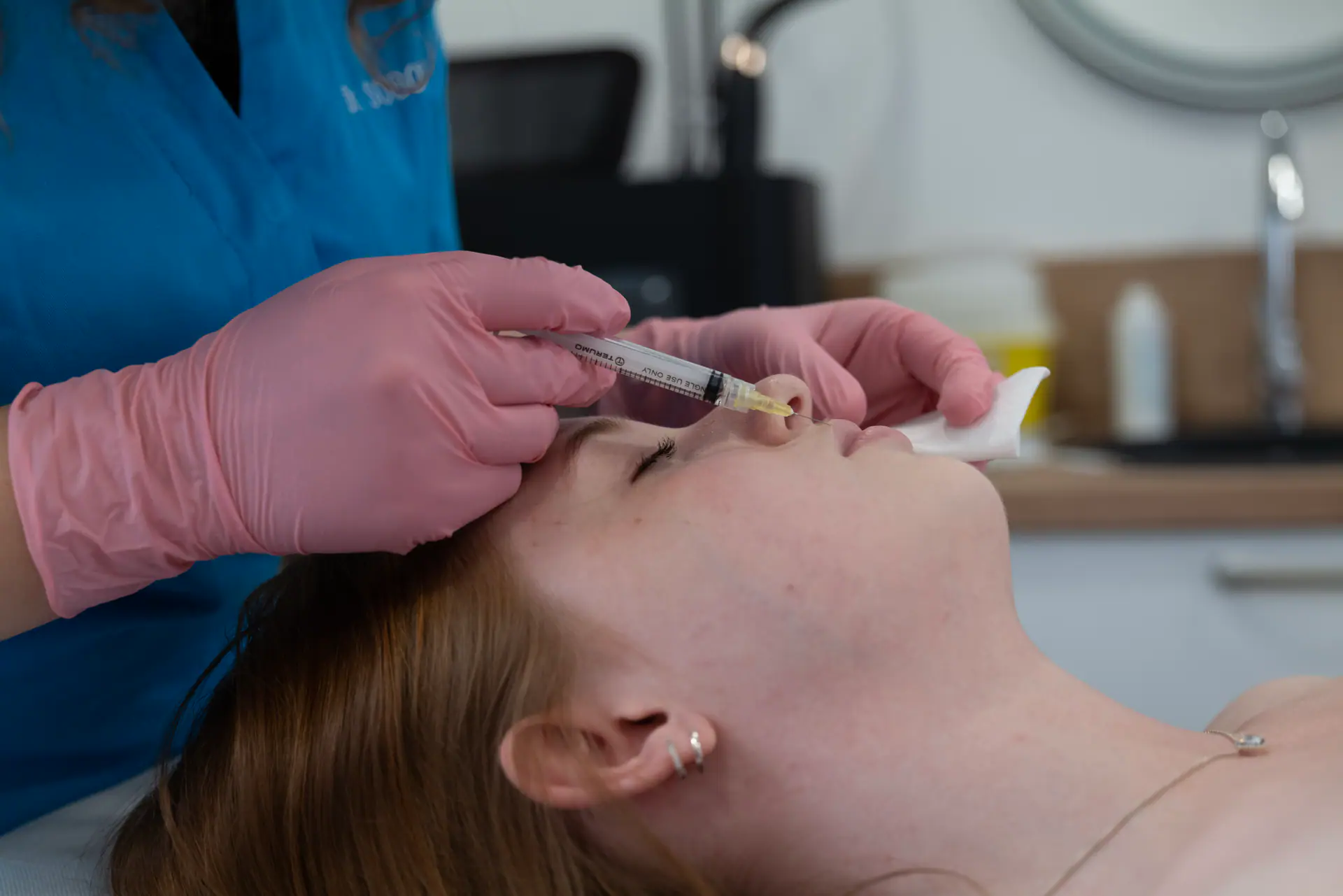
Hyaluronic acid injections are used to fill a wrinkle, restore volume or reshape a facial contour. The molecule occurs naturally in the skin, where it holds water. The injected gel is gradually broken down by the body, and it can be dissolved if needed with an enzyme called hyaluronidase.
Indications
- Deep lines and folds, such as the nasolabial folds
- Loss of volume in the cheeks or temples
- Lip volume and definition
- Hollows under the eyes
- Chin and jawline
- Hollow backs of the hands
What to expect
- 1A consultation first, to examine the face, check for contraindications and agree on the areas to treat
- 2The skin is cleansed and disinfected, with numbing cream if needed
- 3Injections with a fine needle or a cannula, taking 15 to 30 minutes depending on the areas
- 4Gentle moulding of the area to spread the product
- 5A follow-up visit about two weeks later
Contraindications
- Pregnancy and breastfeeding
- Active infection or lesion on the area to be treated, such as a cold sore outbreak
- Known allergy to hyaluronic acid or lidocaine
- Active autoimmune disease
- Clotting disorders or anticoagulant treatment, to be mentioned before the session
- A previous reaction to a filler product
Frequently asked questions
When will I see the result?
The effect is visible as soon as the session ends. Swelling can change how the area looks for the first few days, especially on the lips. The result is assessed 2 to 4 weeks after the injection, once the swelling has settled.
How long does it last?
On the lips, which move a lot, it lasts about 6 months. On more stable areas such as the cheeks, chin or folds, it usually lasts 6 to 12 months. It varies with the product, the area and the person.
What happens after the injection?
Swelling and redness are common for 2 to 5 days, and up to 10 days on the lips. Bruises may appear at the injection points and fade within 3 to 10 days. For 48 hours, avoid strong sun, saunas and intense exercise. Rarer complications are explained at the consultation.
Who should not have injections?
Injections are not advised during pregnancy or breastfeeding, with a skin infection in the area (such as cold sores or inflamed acne), or with an autoimmune disease that is not under control. Tell the doctor at the consultation if you take anticoagulants or have a known allergy.