
Overview
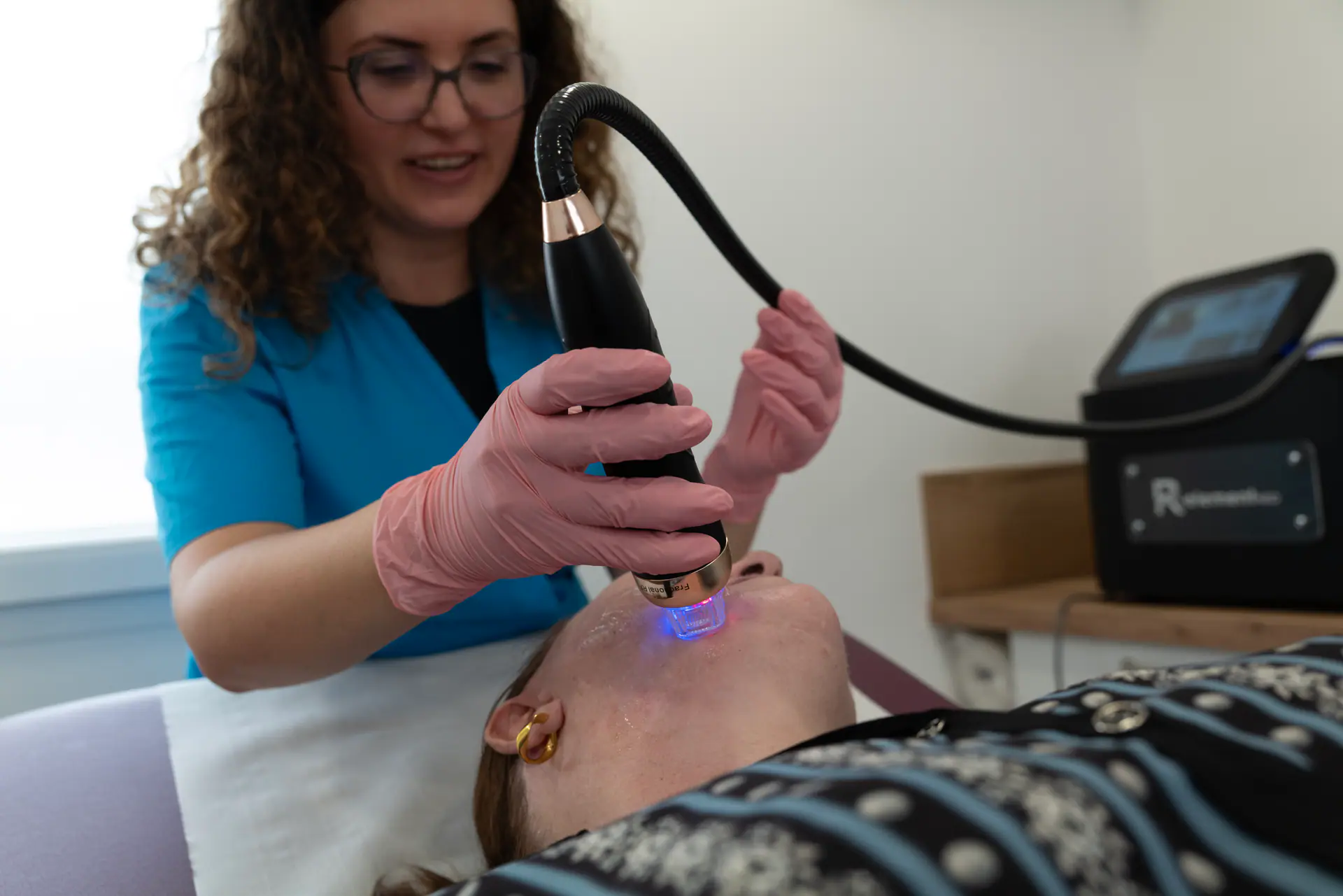
Radiofrequency heats the deeper layers of the skin to stimulate collagen production. The device emits electromagnetic waves that create controlled heat in the dermis while protecting the surface of the skin. Existing collagen fibres tighten, then new fibres form over the following weeks. It is used to firm the skin of the face, the neck and some areas of the body.
Indications
- Sagging jawline and jowls
- Sagging skin on the neck and décolleté
- Loss of firmness and fine lines
- Loose skin on the abdomen, arms or thighs
What to expect
- 1A consultation to assess the skin, check for contraindications and plan the number of sessions
- 2The area is cleansed and a gel is applied
- 3The applicator is moved over the skin, with a gradual feeling of warmth
- 4Brief redness, and a return to normal activities the same day
- 5A course of sessions a few weeks apart, then maintenance
Contraindications
- A pacemaker or an implanted defibrillator
- An insulin pump
- A metal implant in the area to be treated
- Infection or a skin lesion on the area
- Pregnancy and breastfeeding
- Active cancer
Frequently asked questions
How many sessions are needed?
It depends on the area and the condition of the skin. At the start, sessions take place once a month and around 4 sessions are needed before a result can be judged. Maintenance is then necessary, at a frequency set case by case.
When will I see results?
The skin can look tighter straight after a session. The firming effect then develops gradually from 4 to 8 weeks, and keeps building for 3 to 6 months after the last session. The effect lasts, but it is not permanent because skin ageing continues. Maintenance sessions help keep it.
Does it hurt?
No anaesthetic is needed. You feel a warmth that builds gradually and is adjusted to what you find comfortable.
Who should not have radiofrequency?
Radiofrequency is not suitable during pregnancy, with a pacemaker or implanted defibrillator, a metal implant in the treated area, or cancer that is being treated. Tell the doctor at the consultation about any permanent filler, skin condition or recent scar in the area.